Hey Buddy Font: A Stylish Typeface for Branding
I still remember the exact moment I realized my small business branding needed a serious upgrade. I was standing in front of a local market stall, holding a stack of handmade soy candles that I had poured myself. The wax was perfect, the scent blend was unique, and the glass jars were high quality. But when I looked at the labels, something felt off. They looked generic. They didn’t tell the story of the warmth and care that went into every single jar. I knew I needed a typeface that could bridge the gap between professional polish and handmade charm. That is when I discovered Hey Buddy, a beautifully decorated stylish font family that changed the way I approach design assets for my clients and my own ventures.
As a creative consultant who works with everyone from boutique owners to online sellers, I have tested countless fonts. Most script fonts fall into one of two traps: they are either too messy to read or too rigid to feel human. Hey Buddy breaks that mold. It belongs to the Script Amp category, which means it carries that effortless, handwritten energy without sacrificing legibility. For small business owners, this is crucial. Your typography is often the first thing a customer notices, whether they are scrolling through Instagram or picking up a product in a store. It sets the tone before they even read the words.
Why Personality Matters in Packaging Design
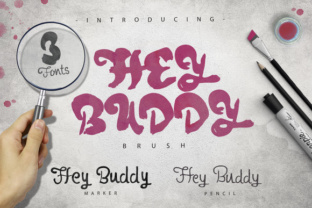
Let’s talk about the three distinct styles included in the Hey Buddy family: Regular, Brush, and Pencil. Having these variations in one package is a game-changer for creating a consistent brand identity. In the past, I would have to buy three different fonts from different designers to achieve a layered look, which often resulted in mismatched weights and awkward spacing. With Hey Buddy, the harmony is built-in.
I recently used this font family for a bakery client who was refreshing their packaging design. We used Hey Buddy Brush for the main logo on the box lids. The brush strokes have a natural texture that mimics real paint, giving it an organic, artisanal feel. It screams "freshly baked" and "made with love." For the flavor descriptions on the side of the box, we switched to Hey Buddy Regular. It is cleaner and more structured, making it easier to read at a glance while still maintaining that friendly, approachable vibe. Finally, for the little "Thank You" stickers we placed on the tissue paper inside, we used Hey Buddy Pencil. It looks like a quick, personal note scribbled by hand, which adds a delightful touch of intimacy to the unboxing experience.
This kind of thoughtful application helps a business look more polished and memorable. When your visuals are consistent, customers start to recognize your brand instantly. Whether it is a candle seller redesigning labels or a café refreshing menus, using a cohesive font family ensures that every touchpoint feels like it comes from the same trusted source.
Real-World Applications for Small Businesses
The versatility of Hey Buddy makes it suitable for a wide range of commercial uses. If you are an online shop owner, you know how important social media graphics are for driving engagement. This font shines in digital ads and Instagram templates. Because it is a display font, it grabs attention quickly in a crowded feed. I recommend using it for headlines or short phrases rather than long paragraphs. For instance, a beauty brand might use it for a promotional banner announcing a summer sale, paired with a clean sans serif font for the details. The contrast creates visual interest and guides the eye naturally.
For those in the service industry, such as coaching brands or freelance creatives, Hey Buddy works wonderfully for business cards and thank-you cards. It adds a personal touch that standard corporate fonts lack. Imagine receiving a business card where your name is written in Hey Buddy Regular; it feels inviting and warm, breaking down barriers before you even meet. Similarly, a boutique creating tags for clothing items can use the Pencil style to add a whimsical, playful element that appeals to a younger, trend-conscious audience.
However, readability is key. While Hey Buddy is highly legible for a script font, you must be mindful of size. On small product labels, such as those on lip balms or essential oil bottles, ensure you use the Regular or Brush style at a large enough point size. Avoid using the Pencil style for critical information like ingredients or warnings, as its textured nature can become hard to decipher when shrunk down. Always test your designs on mobile screens and printed mockups to ensure clarity.
Pairing Tips for a Professional Look
One of the most common questions I get from non-designers is how to pair fonts without making a mess. The secret is contrast. Since Hey Buddy is a decorative, handwritten-style typeface, it pairs best with simple, neutral fonts. A clean sans serif font is your safest bet. Think of fonts like Montserrat, Lato, or Open Sans. These provide a stable foundation that allows Hey Buddy to shine as the star of the show.
If you want a more elegant, editorial design feel, try pairing it with a modern serif font. This combination works beautifully for wedding invitations, high-end skincare labels, or luxury candle brands. The serif adds sophistication, while Hey Buddy keeps it from feeling too stiff or formal. Avoid pairing it with other script fonts or overly complex decorative fonts, as this can create visual clutter and confuse the viewer. Keep it simple, keep it clean, and let the personality of Hey Buddy do the heavy lifting.
Checking Licensing and File Formats
Before you download and start designing, always check the licensing terms. As a commercial font, Hey Buddy is designed for use in products, packaging, merchandise, and client work. However, rules can vary depending on the marketplace or designer. Ensure you have the correct license for digital downloads if you are selling templates, or for physical products if you are printing thousands of labels. It is also wise to check what file formats are included. Typically, you will want OTF or TTF files for general design software, but having web font formats is essential if you plan to use it in web design for your online shop banner or blog headers.
Additionally, look for extra features like alternates and ligatures. These small details can elevate your logo design or custom quotes by adding unique flourishes that make your text look truly bespoke. Multilingual support is another factor to consider if you have an international customer base, ensuring your brand identity remains consistent across different languages.
In the end, investing in a premium font like Hey Buddy is an investment in your brand’s perception. It signals to your customers that you care about the details, that you value aesthetics, and that you are professional. Whether you are updating your website, printing new flyers, or creating stickers for your next market day, this font family offers the flexibility and charm needed to stand out. It is not just about making things look pretty; it is about communicating your values through modern typography. So, take a moment to review your current branding. Does it reflect the true spirit of your business? If not, maybe it is time to say hello to a new favorite typeface.